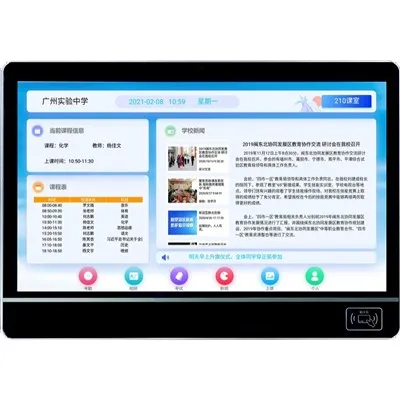
Hey there! As a supplier of Touch Screen Classroom Boards, I often get asked a bunch of questions from educators, school admins, and even tech enthusiasts. One question that pops up quite a bit is, "Are touch screen classroom boards prone to overheating?" Let's dig into this topic and see what's what.
First off, let's understand how these touch screen classroom boards work. They're not just simple pieces of tech. Inside that sleek exterior, there are a whole bunch of components working together. There's the display panel, which has to show all those sharp images and videos. Then there are the touch sensors that let you interact with the board just by tapping or swiping. And don't forget about the processors and other electronics that handle all the data and make everything run smoothly.
Now, any electronic device generates heat when it's in use. That's just a fact of life. The more powerful the device, the more heat it usually produces. Touch screen classroom boards are no exception. When they're being used for long periods, say during a full day of classes, all those components are working hard, and that can lead to heat buildup.
But here's the good news. Most modern touch screen classroom boards are designed with heat management in mind. Manufacturers know that overheating can cause all sorts of problems, like reduced performance, shortened lifespan of the components, and in extreme cases, even damage to the board. So, they've come up with some pretty clever ways to keep things cool.
One common method is the use of heat sinks. These are usually made of metal and are designed to absorb and dissipate heat. They're often attached to the components that generate the most heat, like the processors. The heat sinks have fins or other structures that increase their surface area, allowing them to release the heat into the surrounding air more efficiently.
Another way is through the use of fans. Some touch screen classroom boards have built - in fans that blow air over the components to keep them cool. The fans are usually controlled by a thermostat, which means they'll turn on when the temperature inside the board gets too high and turn off when it cools down.
But even with these heat management systems, there are still some factors that can increase the risk of overheating. One of the biggest factors is the environment. If the classroom is in a hot and stuffy building, or if there's not enough ventilation, the board will have a harder time getting rid of the heat. For example, if the classroom is located on the top floor of a building without proper air - conditioning, the ambient temperature can be quite high, and that can put extra stress on the board's cooling system.


Another factor is usage patterns. If the board is being used continuously for long periods without any breaks, it's more likely to overheat. For instance, if a teacher uses the board for a full - day workshop with no downtime, the components will be under constant strain, and the heat will keep building up.
Software issues can also play a role. Sometimes, a glitch in the operating system or an app running on the board can cause the processors to work harder than they should, leading to increased heat generation.
So, what can schools do to prevent overheating? Well, the first thing is to make sure the classroom environment is suitable. This means having proper air - conditioning and ventilation. Schools should also encourage teachers to give the boards a break every now and then. Maybe turn it off during lunch breaks or between classes.
Regular maintenance is also crucial. Just like any other piece of equipment, touch screen classroom boards need to be cleaned and checked regularly. Dust can accumulate inside the board and block the heat sinks and fans, reducing their effectiveness. So, schools should have a maintenance schedule in place to keep the boards in top condition.
Now, if you're in the market for a touch screen classroom board, you might be wondering which ones are the best at handling heat. At our company, we take heat management very seriously. Our boards are designed with state - of - the - art cooling systems to ensure they can handle even the most demanding usage scenarios. We use high - quality heat sinks and efficient fans to keep the temperature under control.
We also offer a range of products that are suitable for different classroom environments. Whether you're in a small, well - ventilated classroom or a large auditorium, we've got a board that will work for you. And if you're interested in learning more about our products, you can check out our Electronic Signage Hardware, School Digital Display, and School Signage Solutions pages on our website.
In conclusion, while touch screen classroom boards can be prone to overheating, with the right design, proper maintenance, and a suitable environment, the risk can be minimized. If you're thinking about purchasing a touch screen classroom board for your school, don't let the fear of overheating hold you back. Just make sure you choose a reliable supplier and follow the best practices for usage and maintenance.
If you're interested in discussing your specific needs and how our touch screen classroom boards can meet them, we'd love to hear from you. Feel free to reach out and start a conversation about a potential purchase. We're here to help you make the best decision for your school.
References:
- General knowledge of electronic device heat management
- Industry standards and best practices for touch screen classroom board design and maintenance