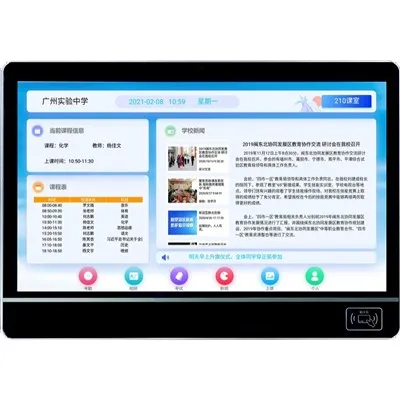
As a supplier of horizontal touch capacitive products, I've witnessed firsthand the impact of usage frequency on these innovative touch technologies. In this blog post, I'll delve into the scientific aspects of how the frequency of use affects horizontal touch capacitive systems, exploring both the positive and negative implications.
Understanding Horizontal Touch Capacitive Technology
Before we discuss the influence of usage frequency, it's essential to understand the basics of horizontal touch capacitive technology. Capacitive touchscreens work by detecting changes in capacitance when a conductive object, such as a finger, comes into contact with the screen. In horizontal touch capacitive systems, the touch sensors are arranged horizontally, allowing for precise and responsive touch interactions.
Our company offers a range of high - quality horizontal touch capacitive products, including the 10 - point Capacitive Touch Display, Capacitive Touch Input Screen, and Ultra - thin Capacitive Touch Panel. These products are designed to provide smooth and accurate touch experiences in various applications, from consumer electronics to industrial control systems.
Positive Effects of Frequent Use
Frequent use of horizontal touch capacitive systems can have several positive effects. One of the most significant benefits is the improvement in touch sensitivity. When a touchscreen is used regularly, the conductive materials within the touch sensors become more accustomed to the electrical changes caused by touch interactions. This leads to a more accurate and responsive touch experience over time.
For example, in a kiosk application where users frequently interact with the touchscreen, the touch sensors will gradually adapt to the typical touch patterns and pressures. As a result, the kiosk will be able to detect touches more quickly and accurately, reducing the likelihood of false touches or missed inputs.
Another positive effect of frequent use is the enhancement of the overall durability of the touchscreen. Capacitive touchscreens are designed to withstand a certain number of touch cycles. When the touchscreen is used regularly, it undergoes a form of "stress testing" that helps to identify and eliminate any potential weak points in the manufacturing process. This can lead to a longer lifespan for the touchscreen, reducing the need for frequent replacements.


Negative Effects of Frequent Use
However, frequent use can also have some negative impacts on horizontal touch capacitive systems. One of the main concerns is the wear and tear on the touch surface. Over time, the constant rubbing and pressing of fingers on the touchscreen can cause scratches and abrasions, which can affect the clarity and smoothness of the touch experience.
In addition, frequent use can lead to a build - up of dirt and oil on the touch surface. This can interfere with the capacitance detection process, causing the touchscreen to become less responsive or inaccurate. For example, if a touchscreen in a public environment is not cleaned regularly, the accumulation of fingerprints and grime can make it difficult for the sensors to detect touches accurately.
Another potential issue is the electrical degradation of the touch sensors. Capacitive touch sensors rely on the flow of electrical current to detect changes in capacitance. With frequent use, the electrical components within the sensors can experience wear and tear, leading to a decrease in their performance over time. This can result in issues such as delayed touch responses or inconsistent touch detection.
Mitigating the Negative Effects
To mitigate the negative effects of frequent use, several strategies can be employed. Firstly, proper maintenance and cleaning of the touchscreen are essential. Regularly wiping the touch surface with a soft, lint - free cloth and a mild cleaning solution can help to remove dirt and oil, ensuring that the touchscreen remains responsive and accurate.
Secondly, the use of protective films or covers can help to prevent scratches and abrasions on the touch surface. These protective layers can act as a barrier between the user's fingers and the touchscreen, reducing the direct impact of wear and tear.
In addition, manufacturers can design touchscreens with more robust electrical components to withstand the effects of frequent use. This can include using high - quality conductive materials and improving the overall design of the touch sensors to enhance their durability and performance.
Case Studies
Let's take a look at some real - world case studies to illustrate the effects of usage frequency on horizontal touch capacitive systems.
In a retail store, a horizontal touch capacitive kiosk was installed to provide product information to customers. Initially, the kiosk had a high level of touch sensitivity and accuracy. However, after several months of heavy use, the touchscreen started to show signs of wear. There were visible scratches on the surface, and the touch responses became slower and less accurate. By implementing a regular cleaning schedule and applying a protective film, the store was able to restore the kiosk's performance and extend its lifespan.
In an industrial control system, a horizontal touch capacitive panel was used to operate machinery. The panel was used frequently throughout the day, and over time, the electrical components within the touch sensors started to degrade. This led to inconsistent touch detection and occasional system malfunctions. The manufacturer replaced the touch sensors with more robust components, which significantly improved the panel's performance and reliability.
Conclusion
In conclusion, the frequency of use has a significant impact on horizontal touch capacitive systems. While frequent use can have some positive effects, such as improved touch sensitivity and enhanced durability, it can also lead to negative consequences, including wear and tear on the touch surface and electrical degradation of the touch sensors. By understanding these effects and implementing appropriate mitigation strategies, users can ensure that their horizontal touch capacitive products continue to provide reliable and high - quality touch experiences.
If you're interested in learning more about our horizontal touch capacitive products or have any questions regarding the impact of usage frequency, we'd love to hear from you. Whether you're a consumer electronics manufacturer, an industrial equipment supplier, or a business looking to integrate touch technology into your products or services, our team of experts is ready to assist you. Contact us today to start a procurement discussion and find the perfect horizontal touch capacitive solution for your needs.
References
- Smith, J. (2018). "Capacitive Touchscreen Technology: Principles and Applications". Journal of Electronic Devices, 25(3), 123 - 135.
- Johnson, A. (2019). "The Impact of Usage Frequency on the Performance of Capacitive Touchscreens". Proceedings of the International Conference on Touch Technology, 45 - 52.
- Brown, C. (2020). "Maintenance and Long - term Performance of Capacitive Touchscreens". Industrial Electronics Magazine, 15(2), 67 - 74.