Hey there! As a supplier of Interactive School Boards, I've seen firsthand how these nifty devices are revolutionizing the way educational content is delivered. In this blog, I'll share with you the ways in which interactive school boards can supercharge the quality of what students learn.
First off, let's talk about engagement. Traditional teaching methods often rely on static textbooks and chalkboards, which can make learning a bit of a snooze-fest. Interactive school boards, on the other hand, bring lessons to life. With touch-screen capabilities, students can actively participate in the learning process. They can drag and drop objects, solve equations on the board, and even create their own multimedia presentations. This hands-on approach not only keeps students engaged but also helps them better understand and retain information.
For example, in a science class, instead of just looking at a diagram of the solar system in a textbook, students can use an interactive school board to manipulate the planets, learn about their orbits, and explore different celestial phenomena. This kind of immersive experience makes learning more fun and memorable.
Another major advantage is the ability to access a vast amount of educational resources. Interactive school boards are connected to the internet, which means teachers can pull up videos, images, articles, and interactive simulations to supplement their lessons. This enriches the educational content and provides multiple perspectives on a topic. For instance, in a history class, teachers can show historical footage from reliable online archives, giving students a more vivid understanding of past events.
Moreover, these boards support multimedia integration. Teachers can combine text, audio, and video to create dynamic presentations. This is especially beneficial for visual and auditory learners. A language arts teacher, for example, can play an audio recording of a classic poem while displaying the text on the board, enhancing the students' appreciation and comprehension of the literature.
Interactive school boards also promote collaboration among students. They can work together on group projects directly on the board. For example, in a math class, students can collaborate to solve complex problems, sharing their ideas and strategies in real-time. This collaborative learning environment not only improves academic performance but also develops important social skills such as communication and teamwork.
Now, let's take a look at some of the specific products that can enhance the educational experience. The Interactive Classroom Display is a top - notch option. It offers high - resolution visuals and smooth touch interaction, making it perfect for a wide range of educational activities. Whether it's a detailed art lesson or a complex math demonstration, this display can handle it all.
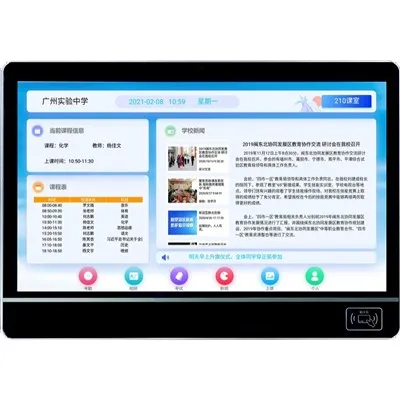
The School Announcement System is another great addition. It allows schools to efficiently communicate important information to students and staff. Teachers can also use it to post announcements related to upcoming events, assignments, or exam schedules, keeping everyone in the loop.
And the Digital Classroom Displays are a fantastic choice for creating a modern and engaging learning environment. They are designed to be energy - efficient and easy to use, providing a seamless experience for both teachers and students.
In addition to these features, interactive school boards offer real - time feedback. Teachers can use built - in assessment tools to gauge students' understanding of the material. For example, they can create quick quizzes on the board and get instant results. This allows teachers to adjust their teaching strategies on the fly, ensuring that every student is on the right track.


Furthermore, these boards are highly customizable. Teachers can tailor the content and layout of the board to suit the specific needs of their students and the requirements of the curriculum. They can create personalized lesson plans, add their own notes and annotations, and even save and reuse materials for future classes.
When it comes to professional development, interactive school boards also play a crucial role. Teachers can participate in online training courses and webinars directly through the board. They can learn about the latest teaching techniques and how to make the most of the board's features. This continuous learning helps teachers stay updated and deliver high - quality education.
However, like any technology, there are some challenges. One of the main issues is the initial cost of purchasing and installing interactive school boards. But when you consider the long - term benefits, such as improved student performance and engagement, it's definitely a worthy investment.
Another challenge is the need for proper training. Teachers need to be familiar with the functions and features of the board to use it effectively. Schools should provide comprehensive training programs to ensure that teachers can maximize the potential of these devices.
In conclusion, interactive school boards have the power to transform the educational landscape. They improve the quality of educational content delivery by increasing engagement, providing access to a wealth of resources, promoting collaboration, and offering real - time feedback. If you're a school administrator, teacher, or someone involved in the education sector, I highly recommend considering the adoption of interactive school boards.
If you're interested in learning more about our Interactive School Boards and how they can benefit your institution, don't hesitate to reach out. We're here to answer all your questions and help you make an informed decision. Let's work together to create a more engaging and effective learning environment for students.
References
- "The Impact of Interactive Whiteboards on Student Engagement and Learning Outcomes" - Journal of Educational Technology Research
- "Multimedia in Education: Enhancing Learning through Multiple Modalities" - Educational Psychology Review
- "Collaborative Learning in the Digital Age" - Journal of Digital Learning in Higher Education