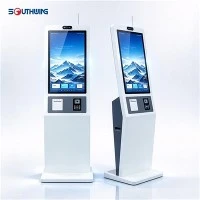
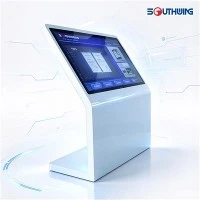
The historical background and development of the interactive whiteboard series can be traced back to the late 20th century. With the advancement of educational technology and the development of computer technology, interactive whiteboards have gradually evolved from traditional whiteboards to new multimedia devices that integrate modern technology.
historical background
The history of interactive whiteboards can be traced back to 1991, when SMART, a Canadian company, pioneered the development and commercialization of electronic whiteboards, mainly promoting their use in the European and American markets
In China, Shenzhen Julong Science and Education Company led the research and development of interactive electronic whiteboard hardware and software in 2001, and launched the first interactive electronic whiteboard in China
development history
The first generation interactive whiteboard: The first generation interactive whiteboard (IWB) is an integrated system that connects a computer with a projector for teaching display. It allows teachers to showcase any content on the computer to the entire classroom, creating a new world full of educational possibilities
Large scale touchscreen displays: With the development of technology, large-sized touchscreen displays (IFPDs) have gradually replaced the first generation IWBs and become the current interactive flat panel displays. IFPD not only inherits the advantages of IWB, but also evolves into an independent teaching tool that does not rely on external objects, widely used in global campuses and commercial spaces
Modern interactive whiteboard: Modern interactive whiteboard integrates real-time interaction and multimedia integration technology, which can easily meet the needs of various scenarios such as teaching and meetings. It is based on real-time databases and long connection communication, ensuring that all participants can see the latest content in real time
Technical characteristics and application areas
The core of interactive whiteboards lies in their real-time interaction and multimedia integration features. It is based on signaling to achieve real-time interaction, and its technology stack is closer to online games, providing a good interactive experience. Front end systems typically use web technology to achieve long connection communication through WebSocket and utilize WebGL for complex graphic rendering. Multimedia integration technology enables interactive whiteboards to integrate various media resources such as video, audio, and images, providing rich and diverse display methods
Future Development Trends
In the future, interactive whiteboards will pay more attention to personalization and intelligence. Through big data and cloud computing technology, interactive whiteboards can provide more accurate teaching resources and content according to users' needs. Combined with artificial intelligence (AI) technology, interactive whiteboards can also achieve intelligent recommendation functions, further improving usage efficiency and quality