Hey there! As a supplier of Digital Classroom Displays, I've had my fair share of folks asking about the difference between these nifty gadgets and regular monitors. So, I thought I'd sit down and write this blog to clear up any confusion.
Let's start with the basics. Regular monitors, the ones you might have at home or in a regular office setting, are designed mainly for general use. They're great for watching movies, browsing the web, or working on documents. You can find them in all shapes and sizes, from small 21 - inch ones to large 43 - inch or even bigger models. They usually come with a standard set of features like a decent resolution, some basic connectivity options such as HDMI and DisplayPort, and maybe a few adjustable settings for brightness and contrast.


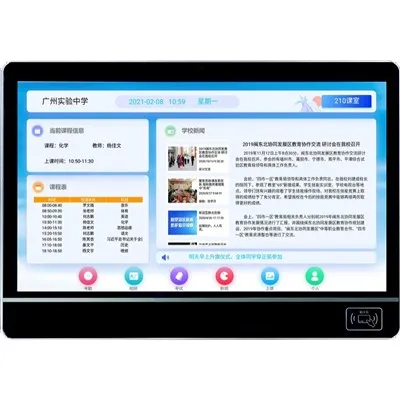
On the other hand, Digital Classroom Displays, like the ones you can check out Digital Classroom Displays, are built with education in mind. These displays are specifically tailored to meet the unique needs of a classroom environment.
1. Durability and Build Quality
Regular monitors are often made for personal or light - office use. They're usually not subjected to the kind of wear and tear that a classroom display has to endure. In a classroom, there are multiple students and teachers using the display throughout the day. There might be accidental bumps, knocks, or even spills. Digital Classroom Displays are built to be more robust. They have stronger frames and are often made with materials that can withstand a bit of rough handling. For example, some of them come with anti - glare and anti - scratch screens, which is a must in a busy classroom where students are constantly interacting with the display.
2. Interactive Features
One of the biggest differences between Digital Classroom Displays and regular monitors is the interactive capabilities. Regular monitors are typically just for viewing content. You sit in front of them and look at what's on the screen. But Digital Classroom Displays are a whole different ballgame. They often come with touch - screen technology, which allows teachers and students to directly interact with the content on the screen. This can be a game - changer in the classroom. Teachers can use interactive whiteboard software to create engaging lessons, draw on the screen, annotate documents, and even play educational games. Students can also participate more actively, answering questions by touching the screen or collaborating on group projects. Educational Digital Boards, like those found at Educational Digital Boards, take this interactivity to the next level with advanced features for teaching and learning.
3. Connectivity and Compatibility
Regular monitors usually have a limited set of connectivity options. You might have an HDMI port, a VGA port, and maybe a USB port for power or audio. Digital Classroom Displays, however, are designed to be more versatile. They come with a wide range of connectivity options, including Wi - Fi, Bluetooth, and multiple USB ports. This makes it easy to connect different devices such as laptops, tablets, smartphones, and even external storage devices. Teachers can quickly switch between different sources of content, whether it's a presentation from their laptop or a video from a student's tablet. Classroom Digital Signage, as seen at Classroom Digital Signage, also benefits from this enhanced connectivity, allowing for seamless integration of different media sources.
4. Content and Software
Another key difference is the content and software that come with these displays. Regular monitors are just a blank canvas for whatever content you want to show. Digital Classroom Displays often come pre - loaded with educational software or have easy access to a wide range of educational apps. This software can include things like lesson planners, interactive textbooks, and assessment tools. It's all designed to make teaching and learning more efficient and engaging. For example, some software allows teachers to create customized lessons based on the curriculum and share them with students. Students can then access these lessons at their own pace, review materials, and complete assignments.
5. Audio and Visual Quality
In a classroom, it's crucial that everyone can see and hear the content clearly. Regular monitors usually have basic speakers that are fine for personal use but might not be sufficient in a large classroom. Digital Classroom Displays are equipped with high - quality audio systems. They often have built - in speakers with better sound output, which can be adjusted to fill the entire classroom. In terms of visuals, these displays usually have higher brightness and better color accuracy. This is important because in a classroom, there might be different lighting conditions, and the display needs to be visible from different angles and distances.
6. Cost
When it comes to cost, regular monitors are generally more affordable. They're mass - produced for a wide consumer market, and there's a lot of competition, which drives down the price. Digital Classroom Displays, on the other hand, are more expensive. This is because of all the additional features, the enhanced durability, and the educational software that comes with them. However, when you consider the long - term benefits in terms of improved teaching and learning outcomes, the investment in a Digital Classroom Display can be well worth it.
Why Choose Our Digital Classroom Displays?
As a supplier, I can tell you that our Digital Classroom Displays offer all these benefits and more. We've worked hard to ensure that our products meet the highest standards of quality and functionality. Our displays are not only durable and interactive but also easy to use. We provide excellent customer support, so if you have any questions or run into any issues, our team is always ready to help.
If you're an educator, a school administrator, or someone involved in the education sector, and you're looking to upgrade your classroom technology, I highly recommend considering Digital Classroom Displays. They can transform the way you teach and learn, making the classroom a more engaging and productive environment.
If you're interested in learning more about our Digital Classroom Displays or would like to discuss a potential purchase, don't hesitate to reach out. We're always happy to have a chat and see how we can meet your specific needs. Whether you're a small school looking to start with a few displays or a large district planning a full - scale upgrade, we've got you covered.
References
- Research on Educational Technology in Classrooms, Journal of Educational Innovation, 2022
- Comparison of Consumer Monitors and Classroom - Specific Displays, Technology in Education Review, 2021
- Interactive Learning with Digital Displays, Educational Psychology Journal, 2020