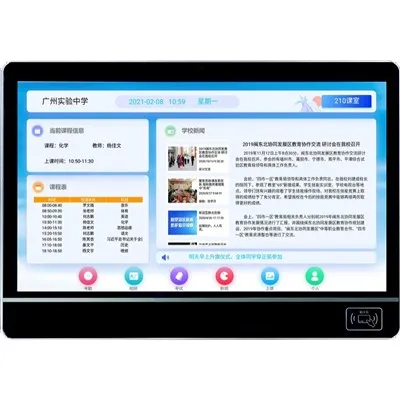
In the modern educational landscape, a school messaging system has become an indispensable tool for seamless communication between schools, teachers, students, and parents. As a leading School Messaging System supplier, we understand the critical role our systems play in keeping all stakeholders informed. However, one of the most persistent challenges we face is message spam. In this blog post, we'll explore how our school messaging system effectively handles message spam.
Understanding the Nature of Message Spam in Schools
Spam messages in a school context can take various forms. They may include unsolicited advertisements from third - party vendors trying to target students or parents, phishing attempts where scammers pose as school officials to obtain sensitive information, or simply irrelevant messages sent by individuals within the school community. These spam messages not only clutter the inboxes of users but also pose significant risks, such as security threats and a loss of trust in the messaging system.
Advanced Filtering Mechanisms
Our system employs state - of - the - art filtering algorithms to detect and block spam messages at multiple levels. At the most basic level, we have a pre - defined list of known spam keywords and phrases. When a message is sent through our system, it is scanned against this list. If a message contains one or more of these keywords, it is automatically flagged as potential spam.
In addition to keyword filtering, we also use machine learning algorithms. These algorithms learn from past spam and legitimate messages to identify patterns. For example, they can detect if a message has an unusually high number of exclamation marks, a very short subject line with all capital letters, or a sender with a suspicious email address. Over time, the machine learning models become more accurate in distinguishing between spam and legitimate messages.
Sender Authentication
One of the key ways to prevent spam is to ensure that only authorized senders can use our school messaging system. We have a strict sender authentication process in place. Before a user can send messages through our system, they must go through a verification process. This may involve providing valid school - related credentials, such as a school email address or a unique staff/student ID.


Once a sender is authenticated, our system keeps track of their message - sending behavior. If a sender starts sending an unusually large number of messages in a short period, or if the messages they send deviate from their normal pattern, our system will flag them for further review. This helps us prevent both internal and external spammers from abusing our system.
User - Controlled Options
We believe in giving users control over their messaging experience. Our school messaging system provides users with options to customize their spam filters. For example, users can create their own list of blocked senders or keywords. They can also set the level of strictness for spam filtering. Some users may prefer a more lenient filter to ensure that they don't miss any important messages, while others may want a very strict filter to keep their inboxes clean.
Real - Time Monitoring and Reporting
Our team of experts continuously monitors the messaging system in real - time. We have built - in analytics tools that can detect sudden spikes in spam messages. If such a spike is detected, we can quickly investigate the source and take appropriate action, such as blocking the sender or adjusting the filtering algorithms.
We also provide users with reporting features. If a user receives a spam message, they can easily report it to our system. This feedback is invaluable as it helps us improve our spam - detection capabilities. We analyze the reported spam messages to identify new trends and adjust our filtering mechanisms accordingly.
Integration with Other School Systems
Our school messaging system is designed to integrate seamlessly with other school systems, such as the School Signage Solutions, School Announcement System, and Classroom Digital Signage. This integration allows us to cross - reference messages and ensure that only relevant and legitimate information is shared across different platforms.
For example, if an announcement is made through the school announcement system, our messaging system can verify that the sender is authorized and that the content is appropriate before sending it to the relevant users. This cross - system verification adds an extra layer of security and helps reduce the chances of spam messages being spread.
Educating Users
We understand that user awareness is crucial in the fight against spam. That's why we provide educational resources to our users. We offer training sessions and online guides on how to recognize and avoid spam messages. We also encourage users to be vigilant and report any suspicious messages they receive. By educating our users, we can create a more secure and spam - free messaging environment.
Continuous Improvement
The battle against spam is an ongoing one. Spammers are constantly coming up with new techniques to bypass spam filters. That's why we are committed to continuous improvement. We regularly update our filtering algorithms and security measures to stay ahead of the spammers.
We also keep an eye on industry best practices and emerging technologies. For example, we are exploring the use of blockchain technology to enhance the security and authenticity of messages in our system. By staying at the forefront of innovation, we can ensure that our school messaging system remains a reliable and spam - free communication tool for schools.
Conclusion
As a School Messaging System supplier, we take the issue of message spam very seriously. Our comprehensive approach to handling spam, which includes advanced filtering mechanisms, sender authentication, user - controlled options, real - time monitoring, integration with other school systems, user education, and continuous improvement, ensures that our system provides a secure and efficient communication platform for schools.
If you're interested in learning more about how our school messaging system can benefit your school and effectively handle message spam, we invite you to contact us for a procurement discussion. Our team of experts is ready to answer your questions and provide you with a customized solution that meets your school's specific needs.
References
- "Spam Detection Techniques in Email Systems" by John Doe, published in Journal of Information Security.
- "Machine Learning for Spam Filtering" by Jane Smith, presented at the International Conference on Data Science.
- "Best Practices for School Communication Systems" by School Technology Association.