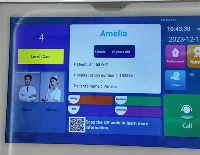
A nurse call system is a hospital communication and emergency response system that allows patients to call nurses, enables two-way communication, prioritizes urgent requests, and provides visual and audible alerts to nursing staff.
For hospitals in Indonesia, choosing a nurse call system involves more than selecting bedside call buttons. Hospitals and healthcare integrators also need to consider system architecture, emergency call functions, communication reliability, environmental conditions, bilingual operation, hospital information system integration, installation requirements, and applicable local compliance requirements.
This guide explains how a modern nurse call system works, its main components and technical specifications, and the key considerations for deploying one in Indonesian hospitals.

What Is a Nurse Call System?
A nurse call system connects patients and nursing staff through a dedicated communication network.
A typical system allows a patient to press a bedside call button to request assistance. The call is transmitted to the nurse station, where staff can identify the calling bed and call type. Corridor displays and audible alerts can provide additional notification, while two-way voice communication allows nurses to communicate with patients before reaching the bedside.
For hospitals, the purpose is not simply to provide a call button. A complete nurse call system can help organize patient requests, distinguish emergency situations from routine calls, record response information, and improve communication between patients and nursing staff.
The system described for the Indonesian market supports patient calling, two-way communication, emergency assistance, ward dispatching, data statistics, and equipment linkage. It can be deployed in general wards, VIP rooms, ICUs, rehabilitation facilities, nursing homes, maternity clinics, and specialist healthcare facilities.
How Does a Hospital Nurse Call System Work?
The basic workflow can be summarized as:
Patient Call → Signal Transmission → Nurse Station Alert → Corridor Notification → Two-Way Communication → Response Recording
When a patient activates a bedside call unit, the system identifies the associated bed and call type. The nurse station controller receives the request and provides the corresponding alert. If required, the corridor display can show the bed number, call type, and waiting time.
Nurses can communicate with the patient through two-way voice communication and respond according to the priority of the call.
The system can also record information such as call time, response time, call type, and operator information for later reporting and analysis.
For the documented system, the nurse station and corridor display are designed to respond to a triggered call within 200 ms, while the main controller can support up to 200 terminals online and 32 concurrent calls.

What Are the Main Components of a Nurse Call System?
A hospital nurse call system normally consists of several interconnected devices rather than a single terminal.
1. Nurse Station Controller
The nurse station controller is the central device for ward-level call management.
It can display the calling bed, call type, call time, and nursing status. The system also supports priority processing, call recording, communication history, missed-call reminders, and potential integration with a hospital HIS system.
This allows nursing staff to manage calls from a central location instead of relying only on individual bedside indicators.
2. Bedside Call Unit
The bedside call unit is installed near each patient bed.
Patients can use it to call nurses and communicate through two-way voice. The documented system supports adjustable volume and brightness, anti-misoperation design, wall-mounted or embedded installation, offline self-checking, and fault reporting.
Bedside units can also be associated with different nursing levels, allowing hospitals to configure differentiated call reminders.
3. Bathroom Emergency Call Unit
Bathroom emergency calls require different protection and notification requirements from ordinary bedside calls.
The documented bathroom emergency call unit uses an IP65-rated enclosure and supports one-touch emergency assistance. When activated, it can trigger audible and visual alarms at both the nurse station and corridor display.
The system also supports anti-misoperation and long-press confirmation functions to reduce accidental alarms.
4. Corridor Display
A corridor display provides visual information about active calls in a ward.
It can display:
Calling bed number
Call type
Waiting time
Bilingual text
Voice notifications
Audible and visual alerts
This is particularly useful in wards where nursing staff may not continuously monitor the nurse station controller.
5. Nurse Call Management Software
Management software provides centralized system administration from a Windows computer.
Functions include device configuration, permission management, call statistics, nursing task traceability, fault-log queries, and system maintenance. Reports can be exported for storage and further management.
Wired vs. Wireless Nurse Call Systems
Hospitals may use wired, wireless, or hybrid communication architectures depending on the building structure and project requirements.
The documented system uses a wired + wireless architecture.
For wired communication, it supports TCP/IP networking. For short-distance wireless communication, it supports 2.4 GHz and 433 MHz transmission.
A hybrid approach can be useful when deploying systems in both newly constructed hospitals and existing facilities undergoing renovation. Wired networking can provide structured infrastructure for permanent installations, while wireless terminals can simplify deployment in locations where extensive cabling is difficult.
The system architecture is designed to support independent operation within a single ward as well as centralized management across multiple wards.
Nurse Call System Specifications: What Should Hospitals Check?
Technical specifications are an important part of nurse call system selection. Hospitals and healthcare integrators should consider communication, capacity, audio quality, environmental protection, data storage, and integration capabilities.
Communication
The documented system supports:
TCP/IP wired communication
Transmission distance up to 1,000 m
Communication latency ≤100 ms
2.4 GHz / 433 MHz wireless communication
Up to 200 terminals per main controller
Up to 32 concurrent calls
The system also uses two-way high-definition voice communication with noise reduction and echo cancellation.
Environmental Protection
Hospitals in Indonesia may require equipment suitable for hot and humid environments.
The documented system specifies:
Operating temperature: -10°C to +60°C
Operating humidity: 10%–95% RH, non-condensing
Indoor terminals: IP54
Bathroom terminals: IP65
These specifications are intended to support deployment in humid tropical environments.
Call Response and Data Storage
The system specifies a call response time of ≤200 ms for the nurse station and display after a terminal call is triggered.
The local host can store more than 100,000 call records and communication logs, with local and cloud backup support described in the technical document.

What Are the Key Features of a Modern Hospital Nurse Call System?
Patient Calling and Two-Way Communication
Patients can initiate calls with a single action, while nurses can communicate with the corresponding bed through two-way voice.
The system distinguishes between routine nursing calls, emergency rescue calls, and bathroom assistance calls, allowing different types of requests to receive different notifications.
Emergency Call Prioritization
Not every call has the same urgency.
The documented priority sequence is:
Emergency Rescue > Bathroom Emergency > Routine Nursing > Daily Consultation
Higher-priority calls can take precedence over lower-priority communication channels, helping nursing staff identify urgent situations more quickly.
Visual and Audible Alerts
When a call is triggered, the nurse station can display detailed bed information and nursing-level information.
The corridor display can simultaneously provide visual notifications, while bilingual voice alerts provide an additional communication channel.
Unresolved calls can continue generating audible and visual reminders to reduce missed or delayed responses.
Call Data Recording and Reporting
A nurse call system can also function as a source of nursing activity data.
The documented system records:
Call time
End time
Response duration
Call type
Operator information
Daily, weekly, and monthly reports can be generated and exported for nursing workload analysis, service-quality review, and record keeping.
Device Self-Diagnosis and Fault Alerts
System reliability depends not only on call transmission but also on identifying equipment problems.
The system can monitor terminal, network, and power status. When an offline device, line fault, or power abnormality is detected, the system can report the fault location and type to assist maintenance personnel.
Nurse Call System Requirements for Indonesian Hospitals
A nurse call system intended for the Indonesian market needs to consider local market requirements as well as international technical standards.
The technical document identifies BPOM, SDPPI, and SNI as key Indonesian compliance areas and also references IEC 62368-1, CISPR 32, and ETSI EN 301 489 for electrical safety and electromagnetic compatibility.
BPOM
The technical document identifies medical device registration requirements under Indonesia's BPOM framework and specifies supporting technical documentation such as product specifications, design and manufacturing information, safety assessment documentation, operating instructions, cleaning and disinfection procedures, and adverse-event reporting information.
For an actual hospital project, the applicable classification and registration requirements should be confirmed according to the specific product configuration and current Indonesian regulatory requirements.
SDPPI
For wireless communication equipment, the document identifies SDPPI requirements covering short-range communication and land mobile radio equipment.
Wireless RF performance, electromagnetic compatibility, and related technical requirements should be verified according to the specific wireless configuration used in the final product.
SNI and Product Labeling
The technical document also specifies Indonesian and English bilingual product labeling, including product model, parameters, manufacturer information, certification information, and production date.
Because certification requirements can vary according to product category and configuration, hospitals, distributors, and system integrators should verify the applicable requirements before importing or deploying equipment.
Can a Nurse Call System Integrate With a Hospital Information System?
Integration is an increasingly important consideration for modern hospital communication systems.
The documented nurse call system supports integration with hospital HIS and LIS systems, allowing information such as bed information and nursing data to be exchanged between systems.
The exact interface, communication protocol, data fields, and integration method should be defined according to the hospital's existing IT architecture during project planning.
For larger hospital projects, this should be evaluated together with:
Bed management
Nursing workflows
Patient information
Call records
User permissions
Data storage
Network architecture
How Is a Nurse Call System Installed in a Hospital?
A successful nurse call installation begins with site planning rather than equipment mounting.
Step 1: Site Survey
The project team evaluates:
Ward layout
Number of beds
Device locations
Network infrastructure
Power supply
Installation environment
Step 2: Cabling
Network and low-voltage wiring are installed according to the hospital's infrastructure requirements. Strong-current and weak-current cables should be separated to reduce interference.
Bathroom installations require additional waterproofing and sealing measures.
Step 3: Device Installation
The main controller, bedside units, emergency call units, corridor displays, and related equipment are installed according to the approved system design.
Step 4: System Configuration
The installation team configures:
IP addresses
Language settings
Call priorities
User permissions
Device relationships
System integration parameters
Step 5: Testing and Acceptance
The system should be tested for calling, two-way communication, alarms, display functions, language switching, and data recording.
The documented acceptance standard specifies 100% terminal online status and a continuous 24-hour operating test without faults.
Nurse Call System Maintenance
A nurse call system is part of a hospital's daily operational infrastructure, so maintenance should continue after installation.
Daily checks should include device online status, call functions, and voice notifications. System data and call logs should also be backed up regularly.
The documented maintenance schedule recommends:
Daily: Check equipment and calling functions
Quarterly: Inspect wiring, interfaces, power and signal transmission
Every six months: Calibrate system parameters and perform firmware upgrades
Annually: Conduct a complete equipment performance inspection
How to Choose a Nurse Call System for an Indonesian Hospital?
Before selecting a system, hospitals and healthcare integrators should evaluate the following questions:
What type of facility is it?
General ward, ICU, VIP room, rehabilitation facility, nursing home, clinic, or another healthcare environment?
How many beds and terminals are required?
System capacity should match both the current ward size and possible future expansion.
Is wired, wireless, or hybrid communication more suitable?
Existing infrastructure and renovation conditions should be considered.
Are emergency bathroom calls required?
If so, environmental protection and emergency notification functions should be included.
Does the hospital require bilingual operation?
For Indonesian projects, Bahasa Indonesia and English support may be relevant to local operation and documentation.
Does the system need HIS/LIS integration?
Integration requirements should be defined before deployment.
What local compliance requirements apply?
The applicable BPOM, SDPPI, SNI, and other technical requirements should be verified according to the final system configuration.
What are the maintenance and support requirements?
A hospital should consider not only initial installation but also system monitoring, troubleshooting, upgrades, and technical support.
Frequently Asked Questions
What is a nurse call system?
A nurse call system is a hospital communication system that allows patients to request assistance from nurses and enables nursing staff to receive, prioritize, respond to, and record calls.
What equipment is included in a nurse call system?
A typical system can include a nurse station controller, bedside call units, bathroom emergency call units, corridor displays, gateways, and management software.
What is the difference between wired and wireless nurse call systems?
Wired systems use physical network or communication cabling, while wireless systems use radio communication. A hybrid system combines both approaches and can be useful for different hospital construction and renovation conditions.
Can a nurse call system support emergency bathroom calls?
Yes. A dedicated bathroom emergency call unit can provide emergency assistance while using additional protection against moisture. The documented system specifies IP65 protection for bathroom terminals.
How many devices can one nurse call controller support?
The documented configuration supports up to 200 terminals online per main controller and up to 32 concurrent calls.
Can a nurse call system integrate with HIS or LIS?
The documented system supports HIS and LIS integration for exchanging information such as bed and nursing data. The exact integration method should be defined according to the hospital's existing systems.
What IP rating is suitable for a hospital bathroom call unit?
The documented system uses an IP65-rated bathroom emergency call unit, providing protection against dust and water exposure for the specified installation environment.
Conclusion
A hospital nurse call system should be evaluated as a complete communication and nursing workflow solution rather than simply as a bedside calling device.
For Indonesian hospital projects, important considerations include system architecture, emergency call prioritization, two-way communication, corridor notification, environmental protection, bilingual operation, data recording, HIS/LIS integration, installation requirements, maintenance, and applicable local compliance requirements.
A properly designed system can support communication between patients and nurses while providing hospitals with a more structured way to manage calls, emergency requests, response information, and equipment status.
For hospitals, healthcare integrators, and distributors planning a nurse call system project in Indonesia, the most suitable configuration should ultimately be determined by the facility type, number of beds, building structure, communication architecture, integration requirements, and applicable regulatory requirements.